Developed between 2001 and 2003, this project emerged from my interest in the cultural paradigms that shape Quebec’s collective imagination.
While working on Monument to the Unknown Prostitute in Montreal, I met Audrey. After nearly two months of conversation, negotiation, and explanation, she agreed to participate in exchange for a meal, an outing, and the cost of a transit pass.
What made the encounter decisive was her immediate understanding of the metaphorical relationship between the project and the popular Quebec song Amène-moi à La Ronde. Rather than simply taking part, she chose to intervene in the work by writing new lyrics to the melody.
The project took the form of 50 video brochures measuring 8.5 x 3 inches, each containing a two-minute mini-CD video.
This encounter allowed me to clarify four recurring concerns in my practice: context, voice, social exchange, and the displacement of cultural signs.
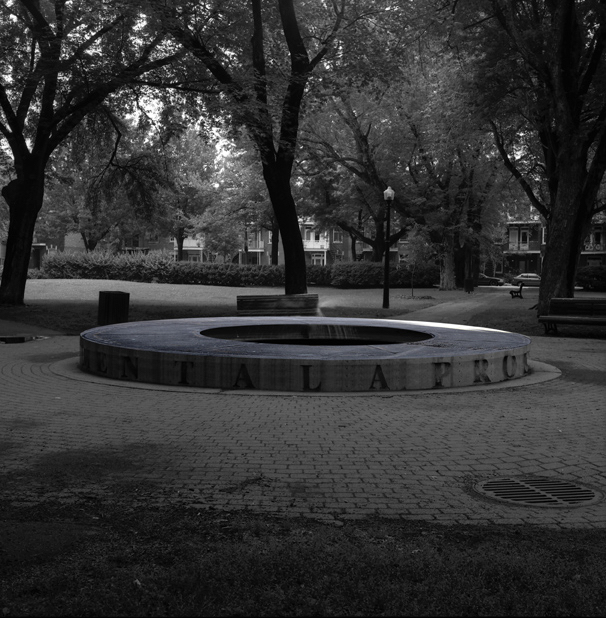
The primary aim of Monument to the Unknown Prostitute was not to provide answers, but to open a field of questions around visibility, recognition, anonymity, and social value.
What is a monument? Who is considered worthy of being remembered? Which lives are publicly honoured, and which remain outside the symbolic structures of recognition? Can a monument be dedicated not to heroism, sacrifice, or national identity, but to vulnerability, survival, desire, and social invisibility?
The project sought to create a more complex and respectful understanding of people engaged in sex work. It attempted to document their dreams, desires, joys, anxieties, and sorrows, while preserving their anonymity. In this sense, the work was not conceived as a portrait in the traditional sense, but as a fragile structure of attention.
The title creates a deliberate contrast with the figure of the Unknown Soldier, a memorial associated with masculine ideologies of power and the symbolic glorification of violence. In response, Monument to the Unknown Prostitute proposes another form of memorial: one addressed to lives excluded from official recognition, and to forms of existence that remain socially present yet symbolically erased.
This concern continues to resonate with my current research. My work often begins with intuitions rather than conclusions. The object, in its material and symbolic dimension, does not resolve the question; it gives it a form. It becomes a way of testing a social, ethical, or visual problem without closing it.
In this sense, the project can be understood as part of a broader inquiry: how can art make visible what is already present but not fully seen? How can an object carry a question without becoming an answer? And how can a work resist transforming vulnerability into spectacle?